
उत्पादन संपलेview
The MASO 12V Unidirectional Silent Exhaust Port Fan is designed to provide efficient ventilation for various vehicles, including cars, RVs, trailers, and vans. This fan features a durable, weather-resistant, and wear-resistant plastic construction, ensuring longevity and reliable performance. Its dust-proof design helps maintain a fresh air environment.
प्रमुख वैशिष्ट्ये:
- High-quality durable plastic construction, weather-resistant and wear-resistant.
- Dust-proof design for a fresh air environment.
- Unidirectional airflow for effective exhaust.
- कमी आवाज ऑपरेशन.
- समाविष्ट अॅक्सेसरीजसह सोपी स्थापना.
- विविध प्रकारच्या वाहनांसाठी योग्य.

आकृती 1: समोर view of the MASO 12V Exhaust Port Fan.
पॅकेज सामग्री
Upon opening the package, verify that all components are present and undamaged. The package should contain:
- 1x Black Exhaust Fan (unidirectional slide)
- 3x शॉर्ट स्क्रू
- 8x लांब स्क्रू
- २x क्लिप्स

Figure 2: Included components: exhaust fan, various screws, and clips.
तपशील
| विशेषता | मूल्य |
|---|---|
| ब्रँड | MASO |
| मॉडेल | एमटीएक्स ३१६११९ |
| रंग | काळा |
| खंडtage | 12 व्होल्ट |
| वाटtage | 3 वॅट्स |
| उत्पादन परिमाणे | 13.5 x 4.5 x 14.5 सेमी |
| Cut-out Hole | अंदाजे 97 x 97 मिमी |
| वायरची लांबी | अंदाजे 160 मिमी |
| विशेष वैशिष्ट्ये | पोर्टेबल |

Figure 3: Detailed dimensions of the MASO Exhaust Port Fan.
सेटअप आणि स्थापना
This exhaust fan is designed for easy installation on the side of your vehicle. Follow these steps for proper setup:
- स्थापना स्थान निवडा: Select a suitable flat surface on the side of your car, RV, trailer, or van. Ensure there is enough space for the fan and proper airflow. Refer to Figure 4 for typical installation locations.
- उद्घाटन तयार करा: Based on the fan's dimensions (approximately 145 x 135 x 45 mm) and the cut-out hole size (approximately 97 x 97 mm), carefully mark and cut an opening in the vehicle's wall.
- Orient the Fan: The fan is a one-way air outlet. Install the shell of the outlet downward to prevent water leakage.
- पंखा सुरक्षित करा: Place the fan into the prepared opening. Use the provided screws (3 short, 8 long) and clips to securely fasten the fan to the vehicle's body. The panel can be fixed with screws.
- इलेक्ट्रिकल कनेक्शन: Connect the fan to a 12V power source. The red wire is for the positive (+) connection, and the black wire is for the negative (-) connection. Ensure connections are secure and properly insulated.
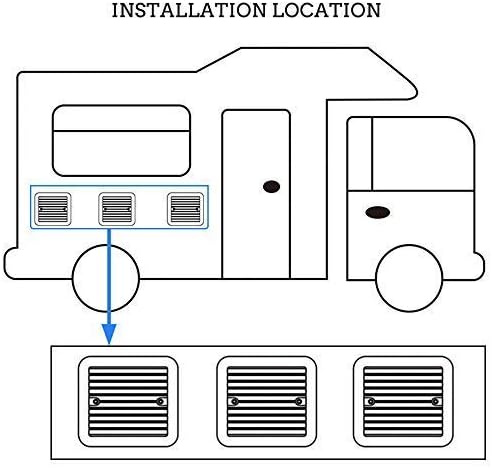
आकृती 4: उदाample of installation locations on a recreational vehicle.

Figure 5: Detail of the fan's mesh and mounting points.
ऑपरेटिंग सूचना
Once properly installed and connected to a 12V power source, the MASO Exhaust Port Fan operates to provide ventilation. The fan is designed for continuous operation to maintain air circulation.
- पॉवर चालू/बंद: The fan will activate when power is supplied to the 12V connection. To turn off, disconnect the power supply or use an inline switch (not included).
- वायुप्रवाह दिशा: This is a unidirectional exhaust fan, meaning it draws air from inside the vehicle and expels it outside.
- शांत ऑपरेशन: The fan is designed for silent operation, minimizing noise disturbance.
- धूळ संरक्षण: The integrated dust cover helps prevent dust and debris from entering the vehicle while allowing air to exhaust.

Figure 6: The fan providing ventilation for an RV, emphasizing low noise and strong airflow.
देखभाल
Regular maintenance ensures the longevity and optimal performance of your MASO Exhaust Port Fan.
- स्वच्छता: Periodically inspect the fan's exterior and the exhaust port for any accumulated dust or debris. Use a soft, damp cloth to wipe down the surfaces. Avoid using harsh chemicals or abrasive cleaners.
- धुळीचे आवरण: The fan features a dust-proof design. Ensure the dust cover remains clear of obstructions to maintain effective ventilation.
- विद्युत जोडणी: Occasionally check the electrical connections for any signs of corrosion or loosening. Ensure they remain secure and properly insulated.
- स्ट्रक्चरल अखंडता: Inspect the fan's mounting for any signs of damage or loosening. Re-tighten screws if necessary.
समस्यानिवारण
If you encounter issues with your MASO Exhaust Port Fan, refer to the following troubleshooting guide:
- पंखा चालू नाही:
- Check the 12V power supply. Ensure it is connected and providing power.
- Verify electrical connections (red wire to positive, black wire to negative) are secure and not corroded.
- Inspect for any loose wiring or damaged components.
- कमी हवेचा प्रवाह:
- Check the exhaust port and fan blades for obstructions (e.g., leaves, debris). Clean as necessary.
- Ensure the dust cover is not blocked.
- असामान्य आवाज:
- Inspect the fan blades for any foreign objects or damage.
- Ensure the fan is securely mounted and not vibrating against the vehicle's surface.
या पायऱ्या फॉलो केल्यानंतरही समस्या कायम राहिल्यास, कृपया ग्राहक समर्थनाशी संपर्क साधा.
हमी आणि समर्थन
MASO products are inspected before shipment to ensure quality. We offer a 100% satisfaction guarantee. If the product is damaged or cannot be used due to a manufacturing defect, please contact us for a satisfactory solution.
खरेदीसाठी विस्तारित वॉरंटी योजना उपलब्ध असू शकतात:
- 12-month Extended Warranty against failures and defects.
- 24-month Extended Warranty against failures and defects.
For further assistance, technical support, or warranty claims, please refer to the contact information provided with your purchase or visit the official MASO webसाइट